
We replace damaged sewer piping in New Port Richey.
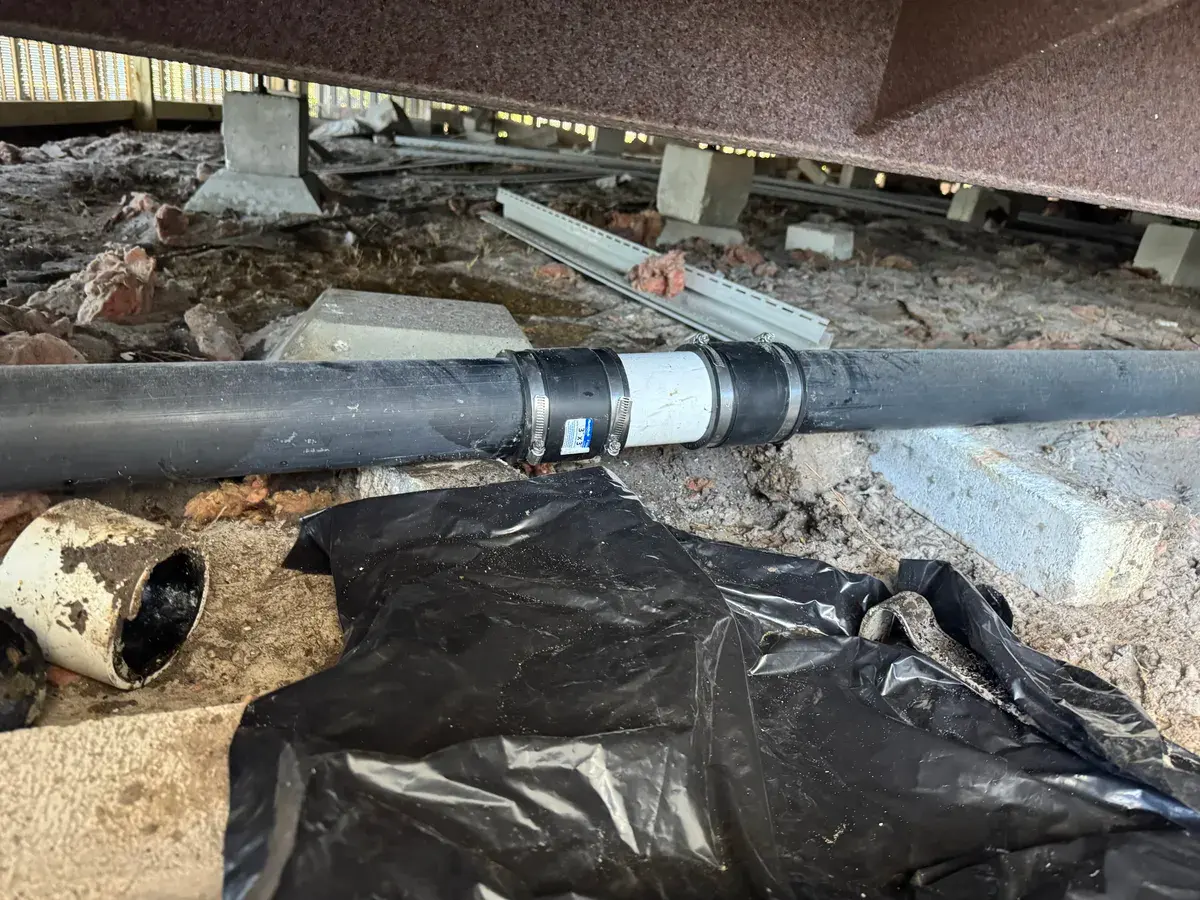

We replace damaged drain and sewer piping at New Port Richey properties. The defect, line route and available access determine whether the repair is limited to a section or needs to include a longer run.
We serve homes and businesses in New Port Richey. Our plumbing business is family-owned by Jeremy and Rebekka Gray.
Read about the repair and your optionsWatch what to expect when we repair your sewer line.
This video uses photographs from our own jobs and quotes from our customers' reviews. It runs under a minute.
Read the video narration
Slow drains throughout the house and gurgling toilets can mean trouble in your sewer line.
Here is what to expect when you call us.
First, we look inside your line with a camera to see what is causing the trouble.
Then we explain which repair fits your line, including whether a trenchless repair suits it.
We cut out the damaged section or replace the whole line, depending on its depth, route and condition.
And we clean up the work area before we leave.
One Tampa homeowner wrote that Ian laid out the necessities versus the niceties, and cleans up after himself very well.
Call Graywater Plumbing, and we will find out what is happening in your sewer line.
We define the damaged private sewer section before planning replacement.
A city sewer system and the line serving an individual property have different repair responsibilities. We can assess the damaged plumbing at your property and explain the replacement being proposed. If a public utility connection is involved, its location and provider need to be established rather than guessed from the postal address.
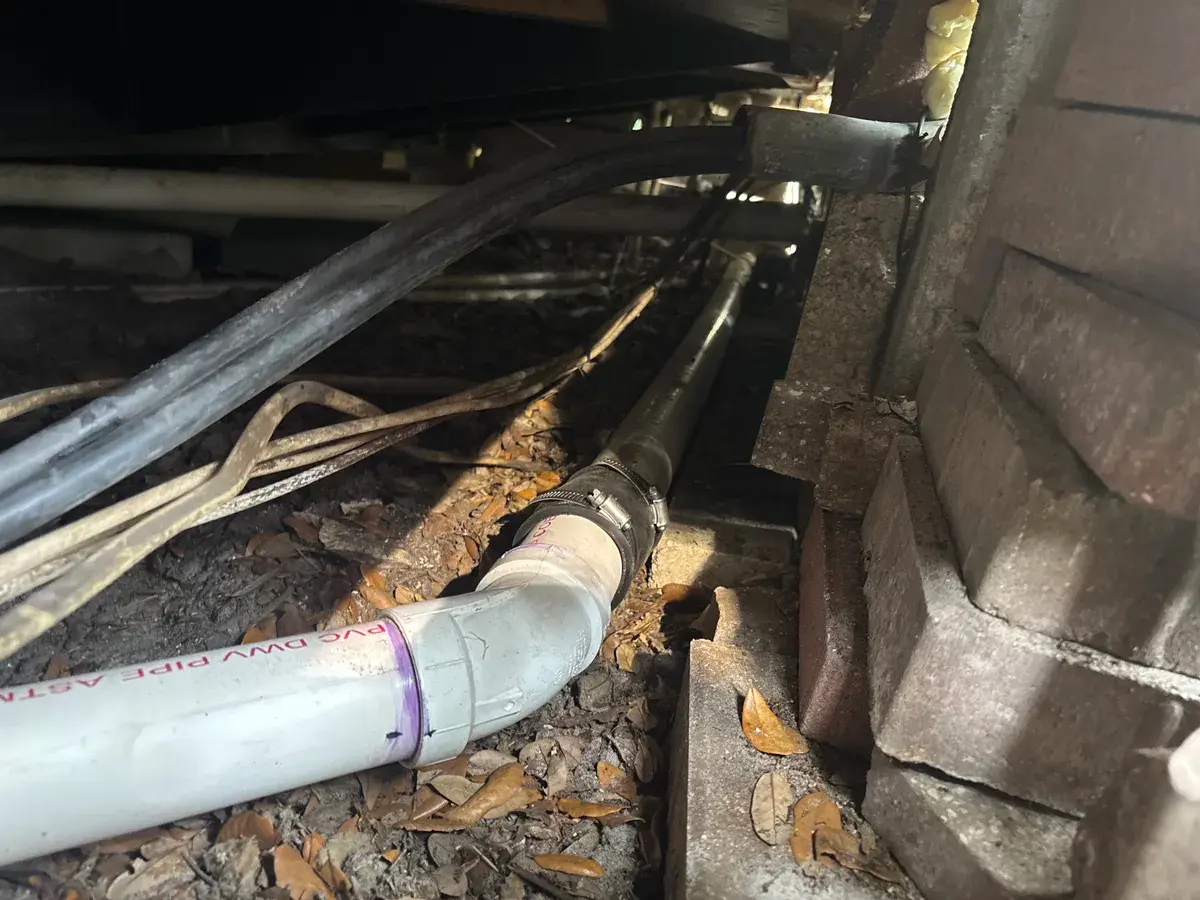
The same distinction applies to cleaning and replacement. Clearing an obstruction does not reconnect a separated pipe or replace a failed section. Our actual sewer-repair photographs show those physical connections, so you can compare the type of plumbing involved with the repair being discussed for your property.
We identify the section that needs repair.
A backup alone does not tell you how much pipe needs replacing. The affected sewer section, its connections and the condition of the surrounding line determine the repair. We can explain a sectional repair when that addresses the damage, or a wider replacement when the line condition calls for it.
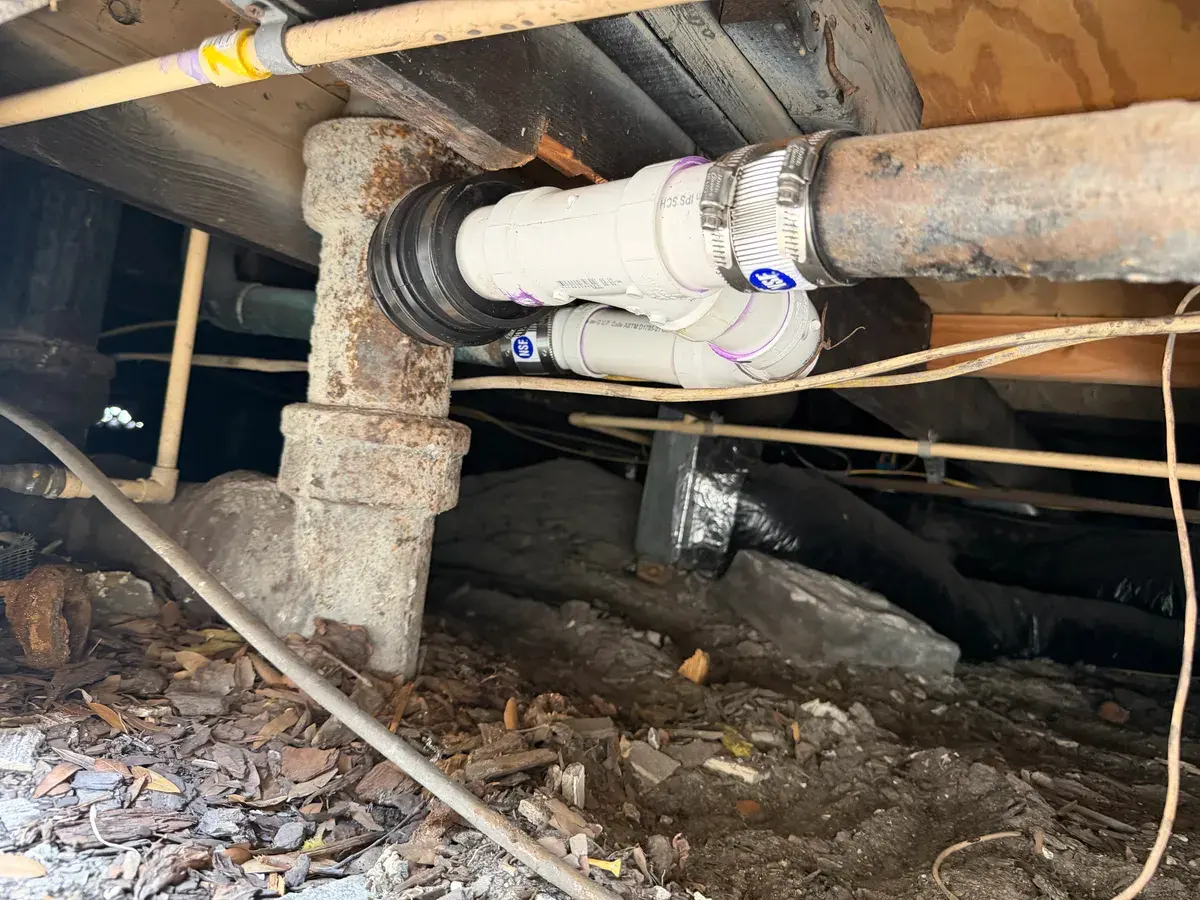

We account for what is above and around the line.
A sewer beneath a crawlspace, a yard or an interior floor presents different access needs. We discuss the route and surfaces involved so you understand how the damaged pipe can be reached. Depth and access are part of choosing a repair, not details to discover after selecting a method.
We keep cleaning, replacement and lining distinct.
Cleaning removes material inside the line. Replacement removes damaged piping and installs a replacement section. Lining is a different method that depends on the existing pipe being suitable. We can explain the approach supported by your sewer condition without promising that every repair avoids excavation.

The city has a process for reviewing certain leak-related bills.
New Port Richey asks its utility customers to submit an adjustment form and repair information when requesting a leak-related billing review. Confirm that the city serves your address and check its current requirements. Completing a repair does not itself establish eligibility for an adjustment.
Read the city utility-adjustment informationDoes a New Port Richey address prove the city owns the sewer I need repaired?
No. The city explains that its utility service area and city limits are different. The address, actual provider and location of the affected pipe need to be checked. We keep the private plumbing repair scope clear.
Can you replace a damaged section without replacing every sewer line?
A sectional replacement may be appropriate when the damage is limited and the adjoining pipe can support the repair. We assess the line and connections before recommending the extent of replacement.
Ask us about your damaged sewer line.
We assess the damaged section, its route and the access needed to replace it. That helps you understand the difference between clearing a blockage and repairing the pipe that carries wastewater away.